Why Use a Chip Removal Device for Metalworking?
Why Use a Chip Removal Device for Metalworking?
Metalworking rarely ends when the cutting tool leaves the workpiece. Loose chips remain around the fixture, collect beneath the cutter, and sometimes return to the cutting zone. A suitable Chip Removal Device helps move this waste away from the machine safely and consistently. It can reduce manual clearing, protect finished surfaces, and support cleaner production areas.
Dr. Tony Schmitz, a recognized machining researcher and educator, emphasizes a practical principle: “Stable cutting creates predictable chips and predictable results.” This idea explains why chip removal deserves attention during process planning. A conveyor, auger, or high-pressure chip system can match different materials, chip shapes, and production volumes. Long aluminum curls need different handling from short cast-iron fragments. Wet chips also require thoughtful separation and maintenance.
Small details matter. A clogged conveyor can stop a valuable machine. A poorly selected system can carry coolant away with the chips or leave sharp fragments near operators. It is not enough to choose the largest device available. The device must fit the machine envelope, coolant conditions, chip load, and maintenance routine.
There is no perfect solution. Some workshops still underestimate chip behavior during tool changes and high-speed cutting. That mistake can create delays and unexpected cleaning work. Careful observation remains essential. Measure chip volume, inspect discharge points, and review operator feedback before upgrading equipment. When matched correctly, a Chip Removal Device becomes more than an accessory. It supports safer handling, steadier uptime, and more disciplined metalworking.
What Is a Chip Removal Device in Metalworking?
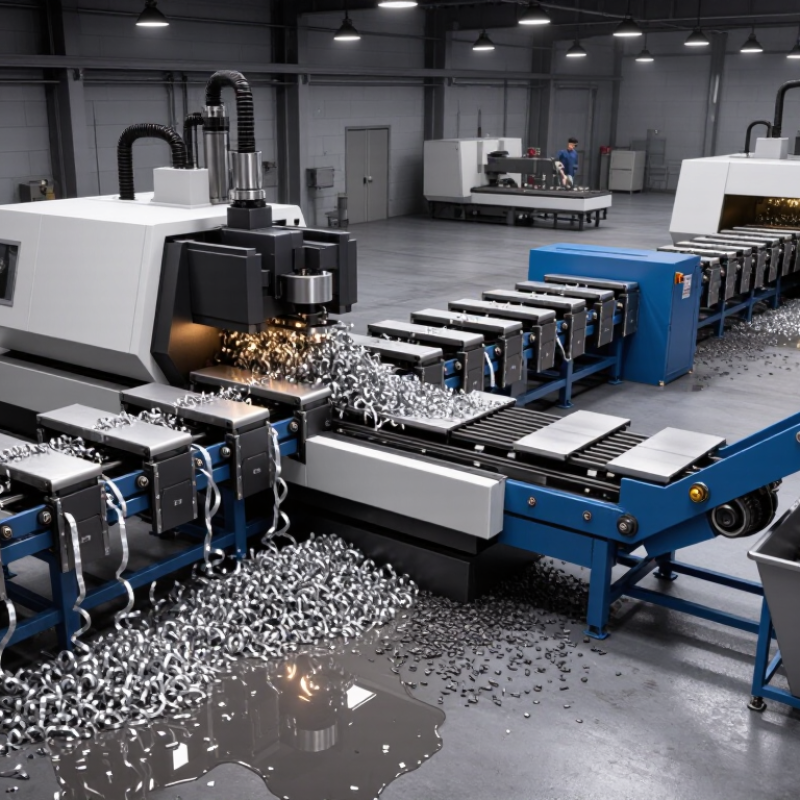
In metalworking, a chip removal device is a machine or attachment that moves chips away from the cutting area. It may use a conveyor, auger, magnetic separator, air system, or industrial vacuum. The choice depends on chip shape, material, coolant, and production volume. Short chips behave differently. Long, stringy chips can wrap around tools and damage workpieces. A suitable device keeps the machine bed clearer and supports safer operator access.
During turning or milling, chips can collect near the tool, fixture, or coolant tank. A conveyor carries them into a container, while an auger handles chips inside narrow spaces. Magnetic systems suit ferrous chips, but they cannot collect aluminum or brass effectively. Vacuum systems help with fine, dry particles, yet filters require regular inspection. In real workshops, the device must match the machine’s discharge height and available floor space. Small mismatches cause jams. The detail is easy to overlook.
Reliable operation also depends on guarding, emergency stops, scheduled cleaning, and correct coolant management. Operators should never reach into a running conveyor or clear a blockage by hand. Lockout procedures and equipment instructions remain essential for maintenance. A chip device is not automatically efficient. An oversized unit may waste energy, while an undersized one can interrupt production repeatedly. I would review chip volume, moisture, access, and maintenance time before choosing equipment. Even then, the first setup may need adjustment after real production begins.
Why Use a Chip Removal Device for Metalworking?
What Is a Chip Removal Device in Metalworking?
A chip removal device continuously collects and transports chips away from the cutting area. Material density affects chip-handling load: for the same chip volume, denser metals produce heavier waste that can accumulate faster and place greater demands on conveyors, augers, or chip collection systems.
The chart shows representative room-temperature densities of commonly machined metals. Actual values vary with alloy, grade, and material condition; loose chip bulk density is lower because chips contain air spaces.
How Chip Removal Devices Work During Machining
Why Use a Chip Removal Device for Metalworking?
How Chip Removal Devices Work During Machining
During machining, a chip removal device moves cut metal away from the work area. It may use a conveyor, auger, scraper, or controlled air stream. Each system matches a different chip shape and production rate. Long, tangled chips often need mechanical separation. Small chips can travel with coolant toward a filter or settling tank.
Small chips matter.
Inside the machine, the tool breaks material from the workpiece. Chips fall onto a collection surface or enter a guided channel. A conveyor carries them to a discharge point. An auger pushes them through a narrow trough.
Magnetic units can separate ferrous particles, while nonmagnetic chips require screening or mechanical transport. Coolant passes through drainage openings, reducing liquid loss and improving chip handling.
In practical machining work, device adjustment matters as much as device selection. Excessive conveyor speed may scatter sharp chips. Low speed can cause buildup near the cutting tool. Operators should inspect scraper edges, troughs, filters, and drive components regularly.
Flow matters. Clean coolant improves visibility and helps protect pumps from blockage. However, no removal device handles every chip equally well. Material, chip length, moisture, and cutting conditions can change performance.
That is imperfect.
A careful trial with the actual material often reveals problems that specifications overlook. Proper guarding and lockout procedures also help reduce contact risks during maintenance.
Types of Chip Removal Devices and Their Applications
Chip removal devices keep machining areas safer, cleaner, and easier to maintain. Their design should match the material, coolant, and production volume. The choice matters.
Belt conveyors move large volumes of long steel or aluminum chips from the machine. They suit turning centers and automated production lines. Scraper conveyors handle heavier, tangled chips and abrasive debris.
Auger conveyors work well beneath compact machines with limited floor space. However, they can struggle when chips become tightly packed. I have seen operators clear such blockages by hand, which wastes time and increases exposure to sharp edges.
Magnetic conveyors separate ferrous chips from coolant during milling, drilling, and grinding. They are less effective with aluminum, brass, or nonmagnetic alloys. Air systems and industrial vacuums remove fine chips from enclosed areas and machine surfaces. They are useful after dry cutting, but filters need regular inspection. Centrifugal separators recover coolant from chip streams, helping reduce fluid waste in busy workshops. Wet chips behave differently.
A practical setup may combine two devices. For example, a scraper conveyor can feed a separator, while a vacuum cleans the surrounding enclosure. Device capacity must exceed the machine’s average chip output, not merely its peak estimate. Safety guards, emergency stops, and easy access for maintenance deserve equal attention. Small shops often improvise. That can work temporarily, but poor chip control eventually affects tool life, coolant quality, and measurement accuracy.
How to Choose and Maintain the Right Device
A chip removal device protects people, tools, and production flow. Choosing one requires more than checking suction power. In shop assessments, I examine chip size, material, coolant use, airflow, and the machine’s access points. A device built for dry aluminum chips may struggle with heavy steel spirals or wet swarf. That mismatch creates blockages and manual clearing, which increases exposure to sharp edges.
The U.S. Bureau of Labor Statistics reported 2.6 million recordable private-industry injuries and illnesses in 2023. Manufacturing recorded a higher incidence rate than the private-industry average. Chip control deserves attention. Select a unit with suitable filtration, collection capacity, emergency isolation, and easy inspection access. Check airflow at the tool, not only at the motor. The wrong reading can mislead operators. ISO 12100 also supports risk-based machine design, including guarding and maintenance access. A useful, imperfect rule is simple: choose for the worst routine chip, not the cleanest sample.
Tips: Empty the container before it reaches its marked limit. Inspect hoses weekly for cracks, soft spots, and packed chips. Clean filters according to the measured pressure drop, not habit alone. Record airflow, noise, filter changes, and repeated blockages. A short log often reveals gradual performance loss. Do not ignore unusual vibration. It may indicate an unbalanced fan or trapped material. Maintenance plans should also consider coolant compatibility, because moisture can damage filters and accelerate corrosion. Recheck the choice after tooling, material, or cutting speed changes.
 +86 13630122007

 CONTACT YIYAN
 CONTACT YIYAN