What is a Servo Motor and How Does it Work?
Servo motors are a crucial component in modern automation and robotics. According to a report by MarketsandMarkets, the global servo motor market is projected to reach $22 billion by 2025. This growth reflects the increasing demand for precision and control in various applications, from manufacturing to robotics.
A servo motor is designed to provide precise control of position, velocity, and acceleration. Its unique feedback mechanism continuously adjusts performance, ensuring accuracy. However, the complexity of these systems can pose challenges. Factors such as signal interference and response time need careful consideration.
Moreover, the choice of servo motor can significantly impact overall system efficiency. Selecting an inappropriate type may lead to energy losses or reduced performance. Understanding these nuances is vital for engineers and technicians. It demands both experience and ongoing education to navigate this evolving field effectively.
What is a Servo Motor?
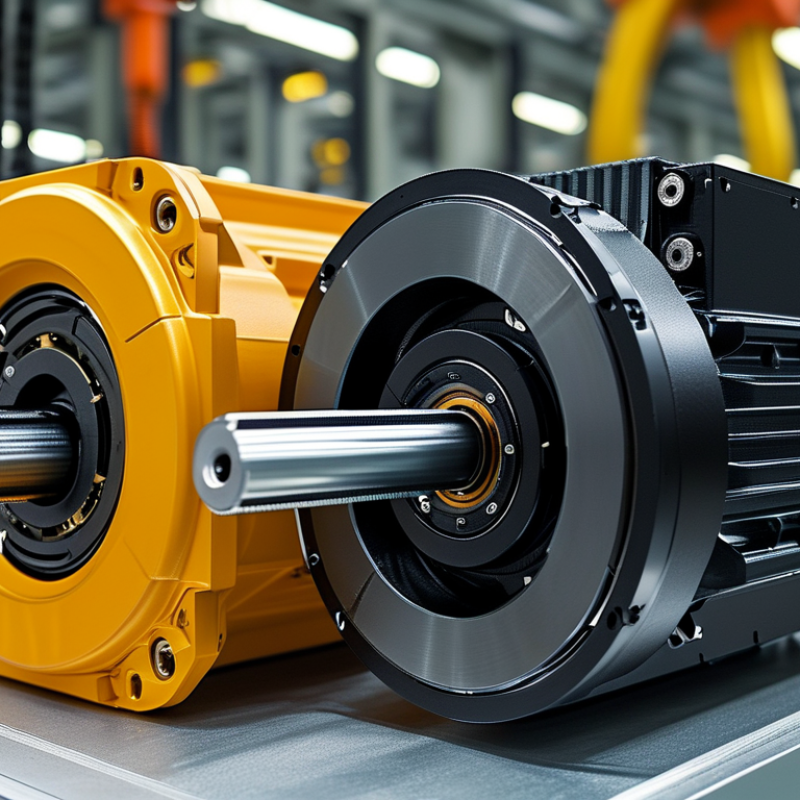
A servo motor is a specialized motor that provides precise control of angular or linear position. It integrates a motor, a sensor, and a feedback mechanism. This combination allows it to achieve high levels of accuracy, making it ideal for applications requiring detailed positioning. These motors are widely used in robotics, CNC machinery, and other automation tasks.
The operation of a servo motor hinges on a control loop. When a command is given, the motor moves to the desired position. The feedback sensor measures the current position and sends this data back to the controller. If there is any discrepancy between the desired and actual positions, the controller adjusts the motor's speed or direction. This process ensures that the motor continuously corrects its position, making it reliable and efficient.
Despite these advantages, using servo motors is not without challenges. They can be complex to set up and require careful calibration. If not tuned correctly, they may oscillate or overshoot the target position. Understanding the mechanics behind these motors is crucial. This knowledge can aid in troubleshooting and enhancing their performance in various applications.
The Basic Components of a Servo Motor
A servo motor is a complex system made up of several crucial components. At the heart is the motor itself, typically a DC or AC type. This motor converts electrical energy into mechanical energy, driving movement. Coupled with the motor is a feedback device, such as an encoder or potentiometer. This device measures the position of the motor shaft, providing real-time data to the control system.
Another vital component is the controller, which interprets the feedback signals. The controller adjusts the motor’s speed and position, ensuring precision in movement. This component often uses PID algorithms for fine-tuning. Power supply is equally important, delivering the required voltage and current. Lastly, the gearbox can amplify torque, allowing the motor to handle heavier loads.
While the components are essential, the understanding of their interplay is often overlooked. Many beginners focus too much on the motor and forget the significance of accurate feedback. This can lead to errors and inefficiencies. Balancing these components requires practice and experience. Each element must work in harmony for optimal performance, which is not always easy to achieve. Experimentation and adjustment are necessary for mastering servo motors.
What is a Servo Motor and How Does it Work? - The Basic Components of a Servo Motor
| Component |
Description |
Function |
| Motor |
An electric motor that drives the servo mechanism. |
Converts electrical energy into mechanical movement. |
| Controller |
An electronic circuit that processes input signals. |
Regulates the position and speed of the motor. |
| Feedback Device |
Includes sensors like encoders or potentiometers. |
Provides real-time position data to the controller. |
| Gearbox |
A mechanical component that adjusts motor output. |
Increases torque and controls speed for precise movement. |
| Power Supply |
The source of electrical energy for the servo. |
Provides necessary voltage and current for operation. |
How Does a Servo Motor Operate?
A servo motor is a precision device widely used in automation and robotics. It operates through a feedback mechanism that enables accurate control of angular or linear position, velocity, and acceleration. According to a report by MarketsandMarkets, the global servo motor market is projected to grow from $6.73 billion in 2021 to $11.63 billion by 2026, highlighting its increasing importance in various applications.
The operation of a servo motor hinges on closed-loop control. When a command signal is sent, the motor's position sensor measures the actual position. This data is compared to the desired position. If a discrepancy exists, the controller adjusts the motor's input until synchronization occurs. This feedback helps achieve remarkable accuracy, often within one degree of precision. However, achieving this high level of control can be complex and may require careful calibration.
Servo motors can face challenges. For example, they may struggle with overheating during prolonged use. Additionally, the need for fine-tuning can make initial setup daunting. Industry insights suggest that approximately 30% of servo motor failures stem from improper configuration. Understanding these potential pitfalls is vital for engineers and operators alike. Adopting best practices can enhance reliability and performance.
Different Types of Servo Motors and Their Applications
Servo motors are crucial components in various industries, offering precision and control in motion applications. There are three primary types of servo motors: AC servo motors, DC servo motors, and stepper motors. AC servo motors are commonly used in industrial automation due to their high efficiency and accuracy. DC servo motors offer flexibility and ease of control in robotics. Stepper motors, on the other hand, are often employed in applications where precise positioning is essential, such as 3D printing and CNC machines.
Different industries utilize these servo motors for specific functionalities. For instance, AC servo motors, according to a recent industry report, account for over 40% of the market share in robotics. They excel in applications requiring rapid acceleration and deceleration. Additionally, the automotive industry heavily relies on DC servo motors for electronic control systems, where quick response times are vital. Stepper motors play a significant role in medical devices, where precision in dosage and movement is critical.
The choice of servo motor can significantly impact performance. Various factors must be considered, such as load requirements and speed. Understanding the limitations of each type is essential. For example, while stepper motors are excellent for precision, they may lose steps under high loads, leading to inaccuracies. Proper selection and application of servo motors ensure optimal performance and reliability in any system.
Common Uses of Servo Motors in Industry and Robotics
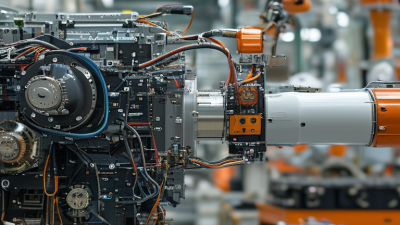
Servo motors play a critical role in various industries, especially in robotics and automation. Their ability to provide precise control of angular position makes them ideal for tasks requiring accuracy. In manufacturing, servo motors are used in robotic arms for assembling components with high precision. This is essential in industries like electronics and automotive, where any deviation can lead to defects.
In addition, servo motors are prevalent in CNC machines. These machines cut and shape materials to exact specifications. The motors help in achieving smooth and accurate movements during operations. However, while servo motors enhance efficiency, their reliance on sophisticated control systems can lead to complications. A simple failure in the system can cause significant downtime, requiring skilled technicians for repairs.
Other common uses include conveyor systems and automated guided vehicles (AGVs). These systems utilize servo motors for steady and reliable motion. Yet, implementing servo motors requires thorough knowledge. If misconfigured, they could lead to inefficiencies or even equipment damage. Industries must balance the benefits of using servo motors with the need for ongoing maintenance and the possibility of technology obsolescence. The continuous evolution in this field means constant learning is essential.
Common Uses of Servo Motors in Industry and Robotics
 +86 13630122007

 CONTACT YIYAN
 CONTACT YIYAN