Leave Your Message

2026 Best Precision CNC Boring Machine Buying Guide

Choosing a Precision Cnc Boring Machine in 2026 is not simply a matter of comparing prices. It is a decision about accuracy, stability, service, and future production demands.

A boring machine may look impressive on a showroom floor. The real test appears beside a warm spindle, a heavy fixture, and a demanding tolerance. Experienced buyers inspect hole accuracy, repeatability, thermal control, vibration behavior, and chip evacuation. They also examine less glamorous details, including controller support, operator training, spare parts, and local service response.

Dr. Tony Schmitz, a respected machining researcher and professor, describes the machine tool as “the foundation of manufacturing.” That principle remains highly practical. A rigid structure supports better boring performance. A reliable feedback system protects consistency. A skilled operator still matters.

Technology does not remove judgment.

This guide explains how to assess each factor before signing a purchase agreement. It compares machine configurations, spindle options, workholding systems, control functions, automation readiness, and lifecycle costs. It also considers real workshop conditions, such as limited floor space, coolant mist, uneven temperatures, and changing material batches.

Brochure accuracy can mislead.

Some specifications appear precise but lack testing conditions. Others ignore maintenance time and fixture limitations. That is where this guide becomes useful, although no buying guide can predict every factory problem. Buyers should verify claims through sample machining, inspection reports, reference customers, and documented acceptance tests.

The strongest choice is not always the fastest machine. It is the machine that delivers dependable accuracy, manageable operating costs, and measurable value throughout its working life.
2026 Best Precision CNC Boring Machine Buying Guide

What Is a Precision CNC Boring Machine?

A precision CNC boring machine is a computer-controlled system designed to enlarge and finish existing holes with exceptional accuracy. Unlike drilling, boring follows a pre-made opening and corrects its diameter, alignment, and surface condition. The machine uses a rotating spindle, a rigid boring bar, and programmed tool paths to remove controlled amounts of material.

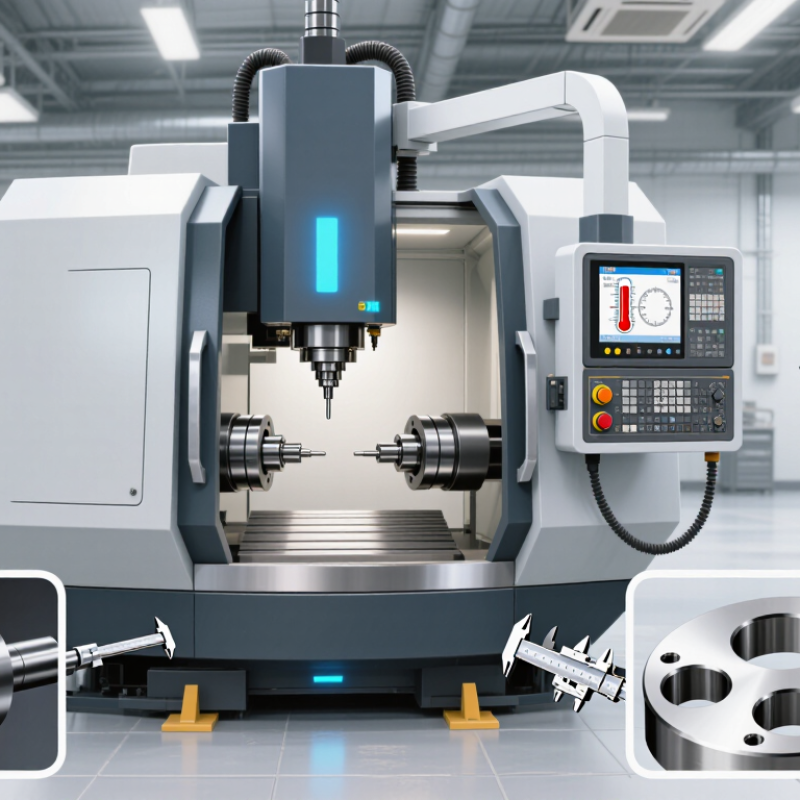
In practical machining work, accuracy depends on more than the control unit. A stable foundation, precise workholding, calibrated tools, and steady coolant flow all matter. For example, a small temperature change can shift a long boring bar and affect the final diameter. Many modern machines use probing, tool measurement, and thermal compensation to reduce these errors. Still, no machine is perfectly rigid. That assumption is often wrong.

When evaluating a precision CNC boring machine in 2026, check its spindle runout, axis positioning accuracy, repeatability, and boring depth range. Ask for inspection records, not only attractive specifications. A test cut in your material can reveal vibration, chip evacuation problems, or unstable dimensions. Watch the hole closely. A clean, consistent surface usually indicates controlled cutting conditions. However, extremely tight tolerances may require climate control, skilled setup, and post-machining inspection. The machine helps, but it cannot replace sound process planning.
Key Specifications and Performance Factors to Compare

When comparing a precision CNC boring machine in 2026, start with measurable specifications, not attractive photographs.

Check boring diameter, spindle speed, positioning accuracy, repeatability, and table load capacity.

A machine may advertise tight accuracy, but ask how it performs after several hours of operation. Thermal drift can change a fine bore by a few microns.

Rigidity deserves close attention.

Inspect the column structure, guideways, spindle bearings, and clamping system. Heavy castings usually reduce vibration during deep boring.

Test the spindle at both low and high speeds. Listen for unusual noise.

Check whether the control system supports tool compensation, probing, remote diagnostics, and detailed production records.

These features can reduce setup errors, especially on complex parts.

Coolant delivery also affects performance.

A steady stream around the cutting zone helps control heat and chip evacuation.

Verify tank capacity, filtration, pump pressure, and access for cleaning.

In my shop-floor evaluations, maintenance access often mattered more than a slightly higher spindle speed. That detail is easy to overlook.

My checklist is not perfect, either. I once focused too heavily on repeatability and underestimated operator training.

Request actual test-cut results, calibration records, and service response times.

Compare power consumption, installation space, foundation requirements, and tooling compatibility before approval.

A machine that fits the brochure may not fit your daily workflow.

How to Choose the Right Machine for Your Applications

2026 Best Precision CNC Boring Machine Buying Guide: How to Choose the Right Machine for Your Applications

Application fit should guide the purchase, not the machine’s brochure accuracy. Start with bore diameter, workpiece mass, material hardness, and required tolerance. A cast-iron housing may need high torque, while aluminum parts often need higher spindle speed and effective chip evacuation. Check spindle power curves, not peak horsepower alone. Measure your largest fixture, too. It is an easy detail to miss.

According to Deloitte’s 2024 Smart Manufacturing Survey, 86% of manufacturers expect smart manufacturing to become a major competitiveness driver within three years. This supports choosing machines with useful data access, thermal monitoring, and maintenance alerts. However, connectivity cannot repair poor rigidity. Ask for positioning accuracy and repeatability results measured under ISO 230-2 conditions. Request test-cut evidence using material similar to your own.

Think about the whole production cell. A 2024 MarketsandMarkets report valued the CNC machine market at approximately 83.6 billion dollars and projected it to reach 117.7 billion dollars by 2029. More options do not mean better decisions. Compare tool capacity, probing cycles, operator access, coolant delivery, and service response time. A machine that fits today’s part but limits tomorrow’s fixture may become expensive quickly. I would also budget for training and verification cuts. Buyers often underestimate both.

Features, Tooling, Automation, and Control Systems

2026 Best Precision CNC Boring Machine Buying Guide

Precision CNC boring machines now depend on more than spindle accuracy. Tooling, automation, and control systems decide daily productivity. Select a rigid boring bar system with balanced holders and quick-change interfaces. Cutting stability matters when machining deep bores, thin walls, or interrupted surfaces. A high-speed spindle is not automatically better. Torque at low speed may matter more for heavy boring.

The International Federation of Robotics reported 541,302 industrial robots were installed worldwide in 2023. This signals stronger demand for automated material handling. Look for probing, pallet changing, tool monitoring, and chip management that match your workload. Deloitte’s 2024 Smart Manufacturing and Operations Survey found 86% of manufacturers view smart manufacturing as a major competitiveness driver within five years. However, connectivity alone does not guarantee accuracy. Control software should provide thermal compensation, tool-life tracking, alarm history, and secure data access. Keep operators in the loop. Fully automatic systems can repeat a bad setup very efficiently.

Tips: Test the machine with your actual material, boring depth, tool diameter, and tolerance. Request a sample cycle, not only a brochure. Check measurement results against ISO 230-2 procedures, and record temperature changes during the trial. A perfect specification rarely exists. I would also question whether maximum automation fits your training level, maintenance capacity, and production mix. Cheap tooling can create vibration, poor finishes, and false machine diagnostics. Allow time for setup learning. That cost is often underestimated.

2026 Best Precision CNC Boring Machine Buying Guide

Representative spindle-speed envelopes by machine configuration

Higher spindle speed is generally useful for smaller tools and finishing work, while large boring bars and heavy roughing typically require lower speeds and higher torque. When comparing machines, also verify the tooling interface, automatic tool-change capacity, probing support, thermal compensation, and the control system’s five-axis, look-ahead, data-connectivity, and process-monitoring functions. The ranges shown are representative of commonly published industrial specifications; actual limits depend on spindle power, workpiece material, tooling, and machine configuration.

Installation, Maintenance, Cost, and Supplier Evaluation

2026 Best Precision CNC Boring Machine Buying Guide

Installation determines much of a boring machine’s accuracy. Measure the foundation, door clearance, power supply, and floor loading before delivery. A rigid, vibration-controlled base protects boring performance. Keep the installation area near a stable temperature. Thermal movement can change bore dimensions during long production runs. Use a qualified technician for leveling, alignment, spindle checks, and commissioning. Record results before accepting the machine.

Maintenance should follow actual operating conditions, not only the calendar. Check lubrication levels, coolant concentration, spindle temperature, and guideway cleanliness each shift. Inspect boring bars for wear and damage. Small errors compound. Back up control parameters after every approved change. Keep service records with dates, measurements, and replaced parts. My early maintenance estimates were too optimistic. Heavy materials and constant high-speed cutting increased inspection time.

Calculate total cost beyond the purchase price. Include tooling, installation, training, energy, software, calibration, and planned downtime. Ask suppliers for a written five-year operating estimate. Request accuracy test procedures and sample inspection reports. Confirm spare-part availability and technical response times in writing. A reliable supplier should explain limitations, not promise perfect results. Visit an operating installation when possible. Speak with the operators, not only the sales team. Their comments often reveal noise, access, cleaning difficulty, and training gaps that brochures miss.