+86 13630122007


In 2026, choosing a Servo Motor means matching its design to the machine, not simply buying the fastest option. A packaging line indexing lightweight cartons has different needs from a CNC axis moving a heavy metal table. Torque, speed, duty cycle, feedback, and installation space all shape the decision. Small details matter.
This guide compares common industrial types: AC servo motors, brushless DC servos, linear servos, direct-drive torque motors, and integrated servo units. Each has strengths and trade-offs. An AC servo may suit a broad range of factory tasks, while a linear motor can move a stage directly without a rotary-to-linear transmission. Direct-drive systems can reduce mechanical backlash, but they may cost more and need careful thermal planning. No shortcut works.
Motor-design expert James R. Hendershot Jr.’s published work offers a useful principle, paraphrased here rather than presented as a verbatim quotation: “Begin with the load, then choose the motor.” That is practical advice, though real installations can complicate it. Gearboxes, cable routing, contamination, maintenance access, and control-system compatibility can change the best fit. A tidy ranking can mislead.
The sections ahead explain where each motor type performs well and what to check before specifying one. Expect useful distinctions, not a universal winner. Even a careful comparison cannot replace measured load data or a review of the actual machine. The right choice should work on the factory floor, not just on paper.
2026 Best Servo Motor Types for Industrial Use
How Industrial Servo Motors Convert Control Signals into Precise Motion
A servo system turns a motion command into controlled movement through a closed feedback loop. The controller sets a target position, speed, or torque. The drive compares that target with encoder feedback, then adjusts current to the motor’s windings. This creates torque and moves the load. The encoder reports position continuously, allowing the system to correct errors. Small errors compound.
This precision matters across automated production. The International Federation of Robotics reported 541,302 industrial robot installations worldwide in 2023, with 4.28 million robots operating globally. Many robotic joints rely on servo systems to coordinate repeatable movement. Still, the motor is only part of the story: gearbox backlash, flexible couplings, heat, and poor tuning can all reduce accuracy. The feedback-loop explanation is useful, but a real machine is less tidy.
Tips: Match motor size and feedback resolution to the load and required accuracy. Check acceleration, duty cycle, and heat at the actual operating point—not only at peak ratings. Then test motion under real load; a setup that works on an empty axis may behave differently in production.
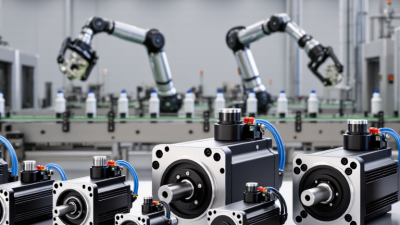
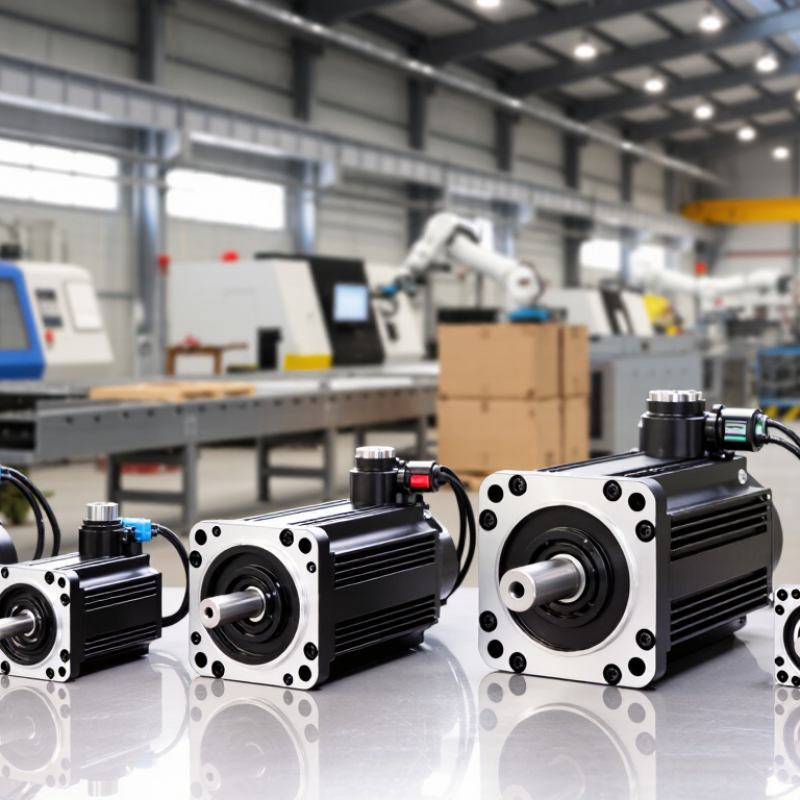
Industrial systems commonly use AC synchronous servo motors, AC induction servos, legacy brushed DC servos, and linear servos. Permanent-magnet synchronous motors suit CNC axes and packaging machines because they deliver precise torque at low speeds. Induction servos can be useful in demanding environments where durability matters. Brushed DC units still appear in older equipment, though brush wear adds maintenance. Linear servos move a load directly along a track, avoiding the screw or belt used by many rotary systems. It depends.
Motor choice is only part of the decision. A servo system also needs a drive, feedback device, and control settings matched to the load. A carton-sealing axis, for example, may need quick starts and stops; a heavy positioning table may need steady torque and careful thermal management. Heat matters. The International Federation of Robotics’ World Robotics 2024 report recorded 541,302 industrial robot installations worldwide in 2023. That figure describes robot installations, not servo-motor sales, but it shows the scale of applications that rely on controlled motion. In practice, the best motor type can be less obvious than a specification sheet suggests: cable routing, dust, vibration, and frequent washdowns can change the choice. A plant’s operating conditions deserve measurement, not guesswork.
Servo motor labels can be confusing because “AC,” “DC,” and “brushless” describe different characteristics. AC and DC refer mainly to the motor’s electrical supply and drive arrangement. Brushless describes how current is switched inside the motor. The categories can overlap: many industrial AC servos are brushless, while brushless DC motors use electronic commutation rather than mechanical brushes. That matters.
AC servo motors are common in industrial machines that need precise speed and position control. A suitable drive can provide smooth torque while a packaging arm accelerates and stops repeatedly. DC brushed servos can be simpler to control, especially in compact or lower-power equipment. But their brushes wear and may need periodic inspection. Small detail, big consequence.
Brushless servos avoid brush contact, reducing one source of wear and supporting frequent operation. They still need a compatible electronic drive, and setup is not automatically simple. A motor may run hot if its load, tuning, or cooling is poorly matched. Check peak torque, continuous duty, encoder feedback, and the machine’s stopping demands. I would not choose by motor label alone; those details often change the practical answer.
2026 Best Servo Motor Types for Industrial Use
Which Servo Motor Fits Each Industrial Application
The right servo motor depends on the motion, load, and working environment. For packaging machines and pick-and-place systems, an AC brushless servo often suits repeated starts, accurate positioning, and changing speeds. Pair it with a suitable encoder and drive, then check peak torque during acceleration—not just the motor’s rated output. Heat matters.
A compact brushless DC servo can fit small conveyors, inspection equipment, and mechanisms with limited installation space. For older, low-power equipment, a brushed DC servo may be practical when maintenance access is easy. Its brushes wear over time, though, so frequent service can become a drawback. Linear servo motors suit direct, precise travel, such as moving a cutting head or test fixture, without converting rotation through a screw or belt.
Match motor inertia to the load, and consider dust, washdown, temperature, and duty cycle. A motor that works well on a short bench test may overheat during continuous production. I’ve seen sizing look straightforward until cables, gearbox friction, or sudden load changes enter the picture. Leave room to review those details; early estimates are sometimes wrong.
Indicative typical speed ranges and common application fit. Actual limits depend on motor design, drive, load, and operating conditions.
AC synchronous servos are widely used for precise machine motion; brushless DC servos suit compact, high-speed equipment; brushed DC servos are often found in simpler or legacy systems; induction servos can serve rugged applications; and direct-drive torque motors are suited to low-speed, high-torque positioning without a gearbox. Speed ranges shown are general examples, not guaranteed specifications.
Comparing servo motors for industrial use in 2026 starts with the machine’s actual load, not its maximum rating. Record the moving mass, acceleration time, and expected duty cycle. Check peak torque for brief starts and continuous torque for sustained work. Speed matters too. A motor may reach the required speed but struggle to maintain it under load. For compact equipment, compare frame size and mounting dimensions alongside power. Do not overlook cable routing or connector clearance. Small fit issues can delay installation.
Next, compare feedback options, drive compatibility, and operating conditions. Incremental feedback may suit repeatable moves with a known reference point. Absolute feedback can retain position information after power loss, but confirm the system’s requirements. Then assess thermal limits, enclosure protection, and available cooling. Dust, washdown, and hot cabinets can change performance expectations. A catalog rating is not a promise; real duty cycles can expose assumptions. Compare service access and documentation, too. The best choice is not always the motor with the highest torque. Leave some design margin, but avoid sizing so generously that cost, inertia, or cabinet space becomes a problem.
| Servo Motor Type | Typical Power and Speed | Torque or Force Characteristics | Feedback and Control | Key Advantages | Main Trade-Offs | Common Industrial Uses |
|---|---|---|---|---|---|---|
| Permanent-Magnet Synchronous Servo (PMSM) | Commonly about 50 W–15 kW; rated speeds often around 1,000–6,000 rpm, depending on the model. | High torque density; provides controlled torque at low speed and can deliver brief peak torque above rated torque within the motor’s specified limits. | Typically uses an encoder or resolver with a servo drive for closed-loop position, speed, and torque control. | High dynamic response, accurate positioning, and strong efficiency across many motion-control tasks. | Requires a compatible drive and feedback setup; permanent magnets can affect cost and high-temperature design considerations. | Packaging machines, CNC axes, robotics, pick-and-place systems, and coordinated automation. |
| AC Induction Servo | Commonly about 0.4–22 kW in industrial motion applications; operating speed depends on pole count, drive, and load. | Rugged construction and useful overload capability; low-speed torque and precision depend on the motor-drive-feedback combination. | Usually paired with a vector-control drive; an encoder or resolver is commonly used when high-accuracy closed-loop control is required. | Robust rotor construction, no permanent magnets, and suitability for demanding environments and higher-power duties. | Can be less compact and less efficient than a comparable permanent-magnet servo; precise dynamic response requires suitable drive tuning and feedback. | Extruders, presses, large conveyors, winding equipment, and heavy-duty machine axes. |
| Brushless DC Servo (BLDC) | Commonly about 10 W–5 kW; rated speeds vary widely, with many compact models operating in the several-thousand-rpm range. | Good torque for compact designs; available torque at very low speed depends on commutation method, drive, and thermal limits. | Electronic commutation; Hall sensors, an encoder, or a resolver may be used, depending on the required precision and drive. | No brushes to replace, compact construction, and a good fit for applications needing high speed or a small motor package. | Requires an electronic drive; performance and smoothness depend on the control method and feedback configuration. | Small automation equipment, labeling machines, medical or laboratory machinery, and compact actuators. |
| Brushed DC Servo | Commonly about 10 W–2 kW; rated speed is model-dependent, often from several hundred to several thousand rpm. | Simple current-based torque control; torque is generally proportional to armature current within the motor’s operating limits. | Usually uses an encoder or tachometer with a drive; brush commutation is mechanical. | Simple control principles, straightforward drive requirements, and useful low-speed behavior in suitable applications. | Brushes and commutator wear and require maintenance; brush arcing can make the type unsuitable for some environments. | Legacy machinery, laboratory equipment, and applications where simple control and service access are priorities. |
| Linear Servo Motor | Rated in linear force and speed rather than rotary power and rpm; travel and speed are design-specific, and some systems reach several metres per second. | Produces direct linear thrust without a rotary-to-linear transmission; continuous and peak force depend on cooling, duty cycle, and motor design. | Typically uses a linear encoder or scale with a servo drive for closed-loop position and velocity control. | Direct drive avoids backlash and transmission compliance; well suited to fast, precise linear motion. | Can require precision guides, careful alignment, and effective heat management; the open motor arrangement may need protection from contaminants. | High-speed inspection, semiconductor equipment, precision stages, sorting, and direct-drive machine axes. |
Comparison note: Power and speed figures are indicative examples of commonly available industrial ranges, not guaranteed specifications or universal limits. Confirm rated and peak torque or force, duty cycle, inertia match, feedback compatibility, environmental rating, and drive requirements against the specific motor and application.