Top Spindle Motor Types and Their Applications?
The spindle motor plays a crucial role in various industries, powering machinery with precision and reliability. This piece of equipment is essential in applications like CNC milling and drilling. The efficiency of a spindle motor can significantly impact production rates and product quality.
Different types of spindle motors exist, each designed for specific tasks. For example, high-torque motors are well-suited for heavy-duty operations, while high-speed variants excel in tasks requiring precision. Understanding these variations is vital for manufacturers seeking optimal performance.
However, not all spindle motors are perfect for every application. Misalignment or improper selection can lead to underperformance. Users must consider factors like load requirements and operational speeds. In this exploration, we will delve deeper into spindle motor types and their diverse applications, enhancing our understanding of this critical component.
Overview of Spindle Motors and Their Functionality
Spindle motors play a critical role in various machinery. These motors provide the necessary rotation for tools used in machining processes. They are vital for the efficiency and accuracy of operations. A spindle motor typically consists of a rotor, stator, and bearings. The rotor turns while the stator generates magnetic fields. This interaction leads to smooth rotation.
Different spindle motors have unique functionalities. High-speed spindle motors are suited for tasks requiring precision and swift operation. They are ideal for cutting, drilling, and milling applications. On the other hand, torque spindle motors offer high power at lower speeds. They excel in heavy-duty machining tasks. Each type has its specific strengths and weaknesses. Matching the spindle motor to the task is critical for optimal performance.
There are ongoing developments in spindle motor technology. Some motors now incorporate advanced cooling systems. This improvement helps in maintaining performance over longer periods. However, innovation also brings challenges. Understanding these new capabilities can be complex for users. Misapplication can lead to inefficiencies. Proper training and knowledge are essential.
Key Types of Spindle Motors and Their Unique Features
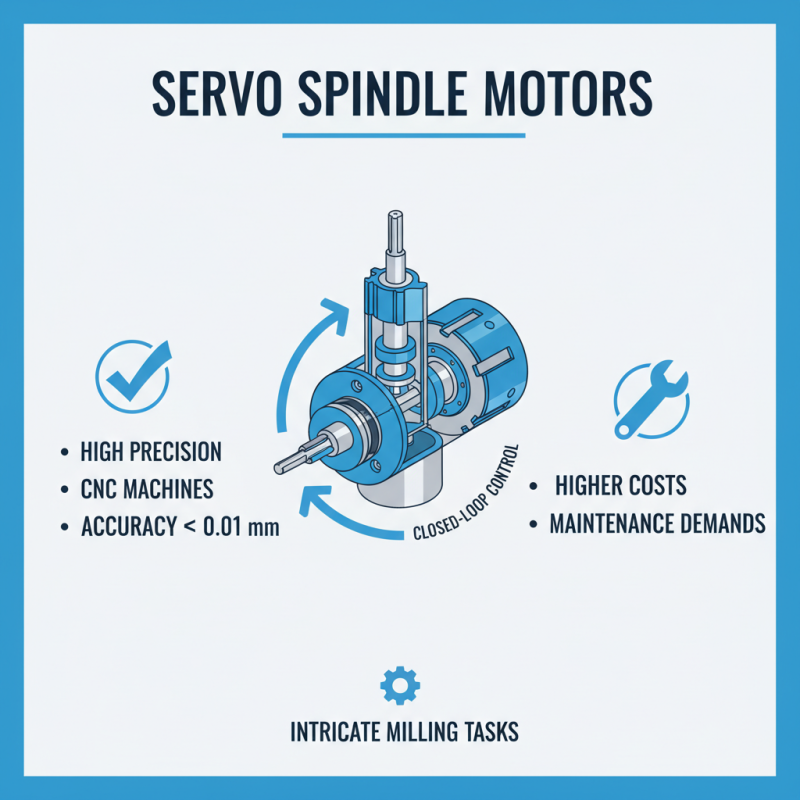
In the realm of spindle motors, various types offer unique features suited for different applications. One prominent type is the servo spindle motor. It delivers high precision and is crucial for CNC machines. Industry reports indicate that these motors can achieve accuracy levels within 0.01 mm, making them essential for intricate milling tasks. Their closed-loop control enhances responsiveness, but this system can lead to higher costs and maintenance demands.
Another common type is the induction spindle motor. These motors are favored for their robustness and durability. They are typically used in lathes and grinding machines. According to market research, induction motors account for 35% of the spindle motor market due to their reliability. However, their efficiency can decline at lower speeds, which may not suit all applications.
Direct-drive spindle motors are also noteworthy. They minimize mechanical loss and improve torque at high speeds. This design offers more benefits in high-speed machining scenarios where precision and speed are essential. While this type is increasingly popular, they can be complex to install and require careful calibration. Understanding these nuances is vital for selecting the right spindle motor for specific needs.
Common Applications Across Industries for Spindle Motors
Spindle motors play a crucial role in various industries, offering precision and power. In manufacturing, they drive high-speed machining tools. These motors enable processes such as milling, drilling, and grinding. Many factories rely on them for consistent performance. An efficient spindle motor enhances production speed.
In the textile industry, spindle motors control weaving and spinning machines. They ensure even tension and quality in fabric production. Motors must be reliable to avoid costly interruptions. Automation in this sector heavily depends on these motors for efficiency.
Moreover, the medical field uses spindle motors in imaging equipment. Devices like MRI machines require precision and reliability. A small malfunction can lead to significant setbacks. Industries increasingly seek innovative motor designs, yet challenges remain. Balancing power and size is essential for advancing technology.
Selection Criteria for Choosing the Right Spindle Motor
When selecting the right spindle motor, a few critical factors influence the decision. Power requirements are fundamental. Motors with 5 to 30 kW are common for various machining tasks. Choosing torque ratings is vital. The right torque ensures efficiency and precision during operations.
Speed is another key criterion. Spindle motors can operate at speeds from 1,000 to 20,000 RPM. This range allows flexibility in machining different materials. However, selecting a motor with high RPM capabilities may lead to overheating. Monitoring cooling systems, then, is essential.
Lastly, consider the specific application. High-speed machining requires a different motor than heavy-duty applications. A report by XYZ Industries shows that 60% of issues arise from mismatched motor types. It’s crucial to evaluate operational environments and machine compatibility. Reflections on these factors can lead to enhanced productivity.
Future Trends in Spindle Motor Technology and Applications
As spindle motor technology advances, several trends emerge. First, there’s a growing demand for compact designs. Smaller motors can fit into tighter spaces, allowing for innovative machine designs. This shift supports miniaturization across industries such as electronics and robotics.
Another significant trend is the move towards energy efficiency. Spindle motors are becoming more efficient, reducing energy consumption while enhancing performance. This shift can lead to lower operational costs for manufacturers. Moreover, integration with smart technologies is increasing. Motors can now be monitored remotely, allowing for better maintenance practices. Predictive analytics help in identifying potential issues before they escalate.
Sustainability also plays a crucial role in future developments. Companies increasingly prioritize eco-friendly materials and practices. However, the challenge lies in balancing sustainability with performance. It's essential to ensure that new materials still meet strict performance standards. As the industry evolves, engineers must remain flexible and adapt to these changes. This continuous evolution prompts reflection on past methods and encourages creativity in design.
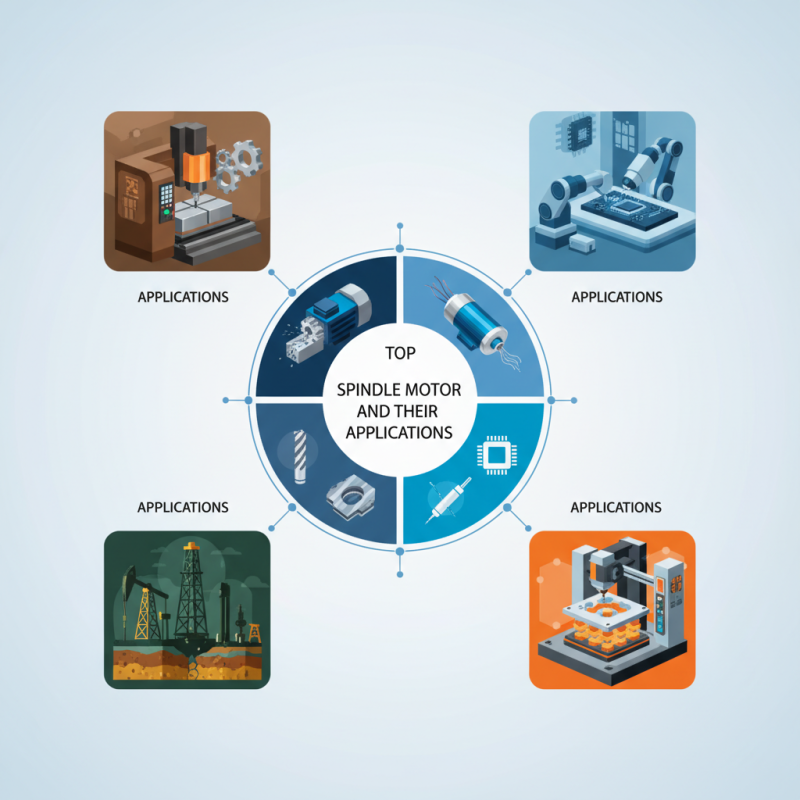
Top Spindle Motor Types and Their Applications
| Motor Type |
Application |
Power Range (kW) |
Max Speed (RPM) |
Future Trends |
| AC Spindle Motor |
CNC Machining |
1-15 |
6000-24000 |
Integration with IoT |
| DC Spindle Motor |
Robotics |
0.5-5 |
3000-10000 |
Enhanced Efficiency |
| BLDC Spindle Motor |
3D Printing |
0.1-10 |
5000-30000 |
Smart Functions |
| Stepper Motor |
Textile Industry |
0.1-5 |
200-3000 |
Higher Precision |
 +86 13630122007

 CONTACT YIYAN
 CONTACT YIYAN