How to Choose the Right Spindle Motor for Your CNC Machine?
Choosing the right spindle motor for a CNC machine is critical for optimal performance. A study from the International Journal of Machine Tools and Manufacture states that spindle motors account for 30-50% of a CNC machine’s overall efficiency. Selecting an appropriate spindle motor can directly influence machining accuracy, speed, and tool life.
Expert Bob Greene, a well-known figure in the spindle motor industry, emphasizes, “The right spindle motor makes all the difference in precision engineering.” This quote reflects the importance of matching the spindle motor's specifications with the specific needs of the project. Many users encounter problems by underestimating the motor’s capabilities or simply choosing based on price.
Choosing the correct spindle motor involves careful consideration of torque, speed, and application suitability. Each application may require different specifications, adding complexity to the choice. As industries continue to evolve, staying updated with the latest technology and trends is vital. Balancing performance with cost might seem straightforward, yet it often challenges even seasoned technicians.

Understanding the Basics of CNC Spindle Motors
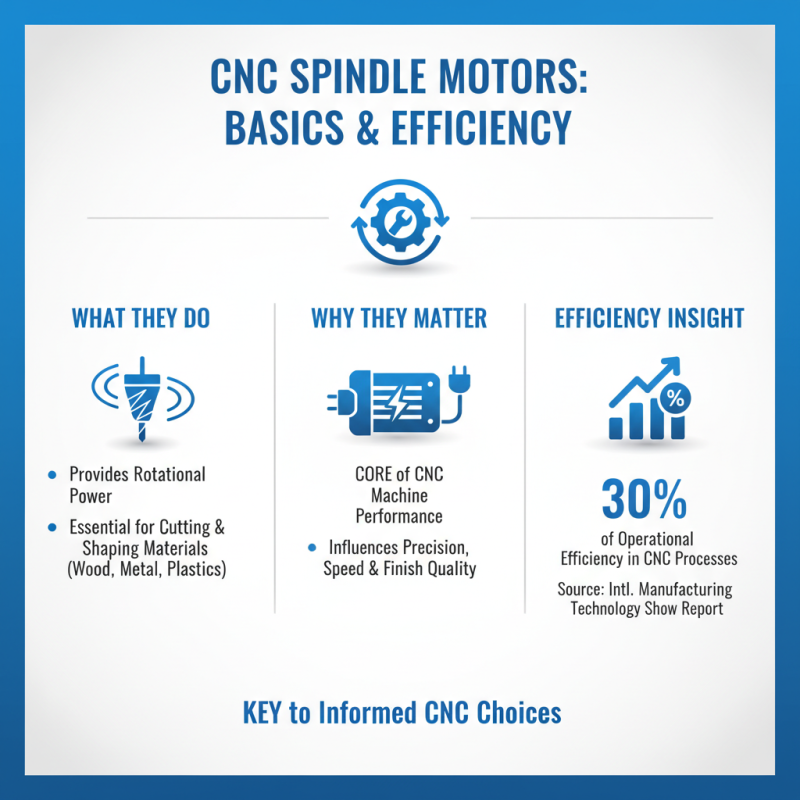
CNC spindle motors are vital for the performance of CNC machines. They provide the rotational power needed for cutting and shaping materials. Understanding their fundamentals is key to making an informed choice. A report by the International Manufacturing Technology Show indicates that spindles account for nearly 30% of operational efficiency in CNC processes.
When selecting a spindle motor, consider your material types. Different materials require different torque and power. Wood may need less power, while metals demand higher capacity. Ideally, choose a spindle with a power rating that exceeds your requirements to prevent overheating.
Tips: Regular maintenance can prolong motor life. Check for signs of wear and listen for unusual sounds.
Another aspect to reflect on is speed. Spindle motors operate at varying RPMs. A mismatch in RPM can lead to poor finishes. According to manufacturers, for optimal results, match your spindle's RPM with your tooling.
Choosing the right spindle motor is complex. Don't rush the decision. Consider all parameters carefully.
Types of Spindle Motors and Their Applications
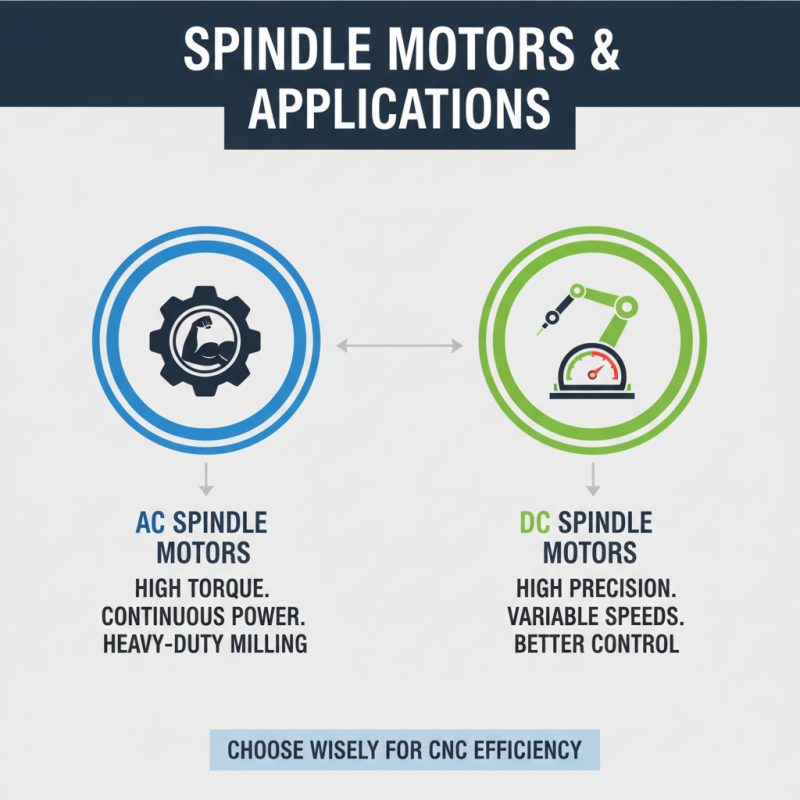
Choosing the right spindle motor is crucial for the efficiency of your CNC machine. There are several types of spindle motors, each with unique applications. For example, AC spindle motors are commonly used for high-torque applications. They provide continuous power and are suitable for heavy-duty milling tasks. On the other hand, DC spindle motors offer higher precision. They are ideal for applications that require variable speeds and better control.
Another type is the brushless spindle motor. These motors have low maintenance needs and deliver smooth operation. This type is favored in high-speed machining, like aerospace components. According to recent industry reports, about 45% of CNC machine users prefer brushless motors due to their efficiency.
Tip: Assess your specific requirements before making a decision. Consider factors such as speed, torque, and the materials you plan to work with. This will help narrow down your options effectively.
Choosing a spindle motor without proper research can lead to performance issues. It's essential to analyze the specifications in detail. Finding the right balance between power and precision can be challenging. Sometimes, spending slightly more might be worth it for long-term benefits.
Key Specifications to Consider When Selecting a Spindle Motor
Choosing the right spindle motor for your CNC machine involves understanding key specifications. Power rating is crucial. It affects the machining capacity. Higher power means faster processing but may lead to overheating if not managed. Think about your projects. If they require precision, a motor with lower power but high RPM might be better.
Another important aspect is the spindle size. Some machines are compatible with specific sizes. Ensure the motor fits your setup. Pay attention to the collet type as well. A mismatch here can lead to problems during machining.
Cooling is also significant. Air-cooled motors are easier to maintain but may not perform as well under heavy loads. Liquid-cooled options are efficient but add complexity. You need to weigh these factors carefully. Consider your working environment, too. Dust and debris can affect performance, leading to wear over time. Reflect on your choices as they impact your CNC machine's longevity.
Evaluating Power Requirements for Your CNC Machine
When evaluating power requirements for your CNC machine, understanding the spindle motor's role is crucial. The spindle motor drives the cutting tool and significantly affects performance. According to industry data, a spindle motor typically requires a power range from 1.5 kW to 20 kW, depending on the application. A lower power rating suffices for soft materials, while harder materials demand higher power.
Selecting the right motor also means considering torque and RPM. For instance, a standard motor might provide 1.2 Nm of torque at an RPM of 24,000. This specification is vital for achieving the desired finish on different materials. However, some users overlook the importance of these figures and may end up underpowered or overpowered, leading to inefficient operation.
Moreover, not all machines have the same power accessibility. Some users might find their CNC machines unable to handle the required demand without modifications. Inadequate power can lead to tool wear or even machine failure, creating unnecessary downtime. Assessing your cutting tools and material types beforehand can help in making an informed decision.
Installation and Maintenance Tips for Spindle Motors
When installing a spindle motor for your CNC machine, consider the mounting position carefully. Ensure it is aligned properly. Misalignment can lead to vibration and decreased performance. Always refer to the manufacturer's guidelines for installation depth and angle.
Tip: Use a level during installation. This trick can prevent unwanted stresses on the motor. A well-mounted spindle increases tool life and enhances precision.
Maintenance is crucial for longevity. Regularly check for signs of wear. Lubricate bearings and inspect connections. Dust and debris can lead to overheating. Clean the spindle and surrounding areas frequently.
Tip: Create a maintenance schedule. Regular checks can save time and money. A proactive approach helps in catching issues early before they escalate.
Choosing the Right Spindle Motor for Your CNC Machine
This chart illustrates the importance of various factors when selecting a spindle motor for CNC machines, including power (kW), RPM, torque (Nm), and maintenance frequency (months). Each factor significantly impacts performance and operational efficiency.
 +86 13630122007

 CONTACT YIYAN
 CONTACT YIYAN