How to Choose the Right Servo Actuators for Your Project?
Choosing the right servo actuators for your project can be a challenging task. As industry expert Dr. Emily Carter, a renowned robotics engineer, stated, "The right servo actuator can make or break the success of your project." This highlights the importance of understanding your specific needs before diving into the selection process.
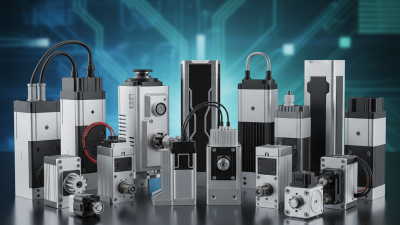
Servo actuators come in various types and specifications. Each has unique advantages and limitations. When selecting, consider factors like torque, speed, and precision. These elements can drastically alter performance and efficiency. For instance, an industrial application may demand high torque for heavy loads, while a hobby project may prioritize speed and responsiveness.
Take time to assess your project's requirements and budget. Sometimes, the perfect actuator might not fit every specification on paper. Real-world testing can offer insights that data alone cannot provide. Don't hesitate to seek expert advice. Your choice of servo actuators could define your project's ultimate success or failure. Remember, it’s a pivotal decision worth careful consideration.

Understanding the Basics of Servo Actuators and Their Applications
Servo actuators play a crucial role in automation and robotics. Understanding their fundamentals is essential for successful project implementation. These devices convert electrical energy into mechanical movement, providing precise control. A report from ResearchAndMarkets predicts the global servo actuator market will reach $11.36 billion by 2027. This growth highlights their increasing importance across various industries.
Applications of servo actuators are vast. They are commonly used in robotics, aerospace, and manufacturing. The automotive sector relies heavily on servo technology for precision steering and control systems. A study indicates that 70% of automation tasks in manufacturing involve servo actuators. However, selecting the right actuator can be challenging. Factors like torque, speed, and feedback mechanisms must be considered.
Many projects face hurdles when choosing specifications. Cost can be a significant barrier. Some may prioritize cost over quality, leading to poor performance. Others might not fully understand control systems, which can lead to inefficiencies. Proper research and consultation are necessary to avoid these pitfalls.
Identifying Key Specifications for Selecting Servo Actuators
Choosing the right servo actuators for your project can be daunting. Key specifications play a crucial role in making the right choice. Consider torque ratings, speed, and positional accuracy. According to a recent industry report, torque requirements can range significantly, from a few Newton-meters to more than 100 Nm, depending on the application.
Tips: Analyze the load your actuator will handle. Always overestimate your needs; a bit of extra torque can prevent future issues.
Speed is another critical factor. Servo actuators typically perform from a few degrees per second to several hundred. For precise applications, accuracy is paramount. A report suggests that 80% of servo users prioritize positional accuracy above other specifications. This can determine the success of your project.
Consider the environment as well. Some actuators are better suited for high temperatures or dust. Match the actuator to your conditions. Remember, not all servo actuators are created equal, and small details can make a big difference.
How to Choose the Right Servo Actuators for Your Project? - Identifying Key Specifications for Selecting Servo Actuators
| Specification |
Description |
Typical Values |
| Torque |
The rotational force the actuator can produce. |
0.5 - 20 N·m |
| Speed |
Velocity at which the actuator can move. |
0.1 - 5 m/s |
| Voltage |
Operating voltage range for the actuator. |
6 - 24 V |
| Control Type |
Method used to control the actuator's position and velocity. |
PWM, Serial, Analog |
| Feedback Type |
Type of feedback mechanism for closed-loop control. |
None, Encoder, Potentiometer |
| Size |
Dimensions of the actuator, crucial for fitting in your application. |
Small, Medium, Large |
| Weight |
Total weight of the actuator, important for portable applications. |
50 - 1500 g |
| Operating Temperature |
Range of temperatures in which the actuator can function. |
-20 to 60 °C |
Evaluating Different Types of Servo Actuators for Specific Use Cases
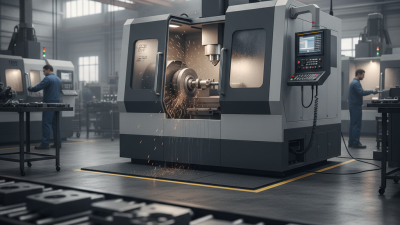
When selecting servo actuators for specific projects, it’s important to evaluate each type thoroughly. Different applications require different actuator characteristics. Positioning accuracy, speed, and torque are essential factors to consider. For instance, high-torque servo actuators are ideal for robotics, while precision servos are better for CNC machines.
For aerospace applications, lightweight actuators are crucial. They reduce the overall weight of aircraft while maintaining performance. In contrast, industrial automation may benefit from more robust actuators that can handle heavy loads and continuous usage. It's also vital to assess environmental factors, such as temperature and humidity, that could impact actuator performance.
Budget constraints can complicate choices. Cheaper options may compromise quality and longevity. Therefore, it's wise to weigh costs against reliability and efficiency. Testing different models can provide insights into their performance and help make informed decisions. However, it’s common to encounter unexpected challenges during testing. Continual evaluation and adjustments are often necessary to achieve optimal results.
Servo Actuator Types Comparison
Analyzing Performance Metrics: Torque, Speed, and Precision Requirements
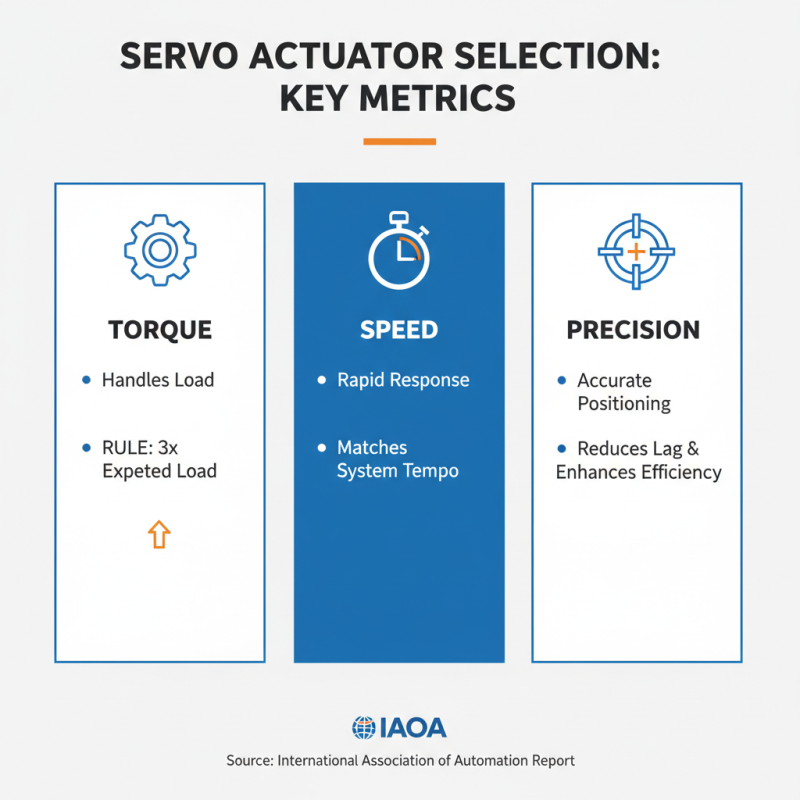
When selecting servo actuators for your project, understanding torque, speed, and precision is crucial. Torque dictates the actuator's ability to handle loads. A report by the International Association of Automation emphasizes that for most applications, torque ratings should be three times greater than the expected load. This ensures durability and long-term performance. If your project requires rapid responses, consider the actuator’s speed ratings carefully. The speed should align with your system’s operational tempo, reducing lag and enhancing efficiency.
Precision is just as vital. High-precision actuators can maintain error margins within ±0.1 degrees. A study conducted by the Robotics Institute highlighted that projects needing intricate movements greatly benefit from higher-resolution actuators. It’s essential to balance these metrics with your project's budget and purpose. While high-performance actuators offer excellent specifications, they may not be cost-effective for simple applications. Check if the actuator’s performance metrics align with your operational goals and constraints. This assessment helps prevent potential missteps and enhances overall project efficacy.
Assessing Cost vs. Performance: Budgeting for Servo Actuator Solutions
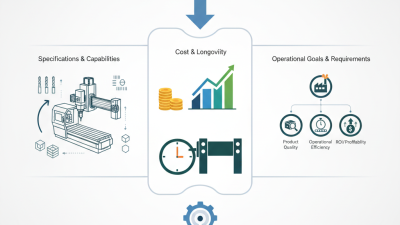
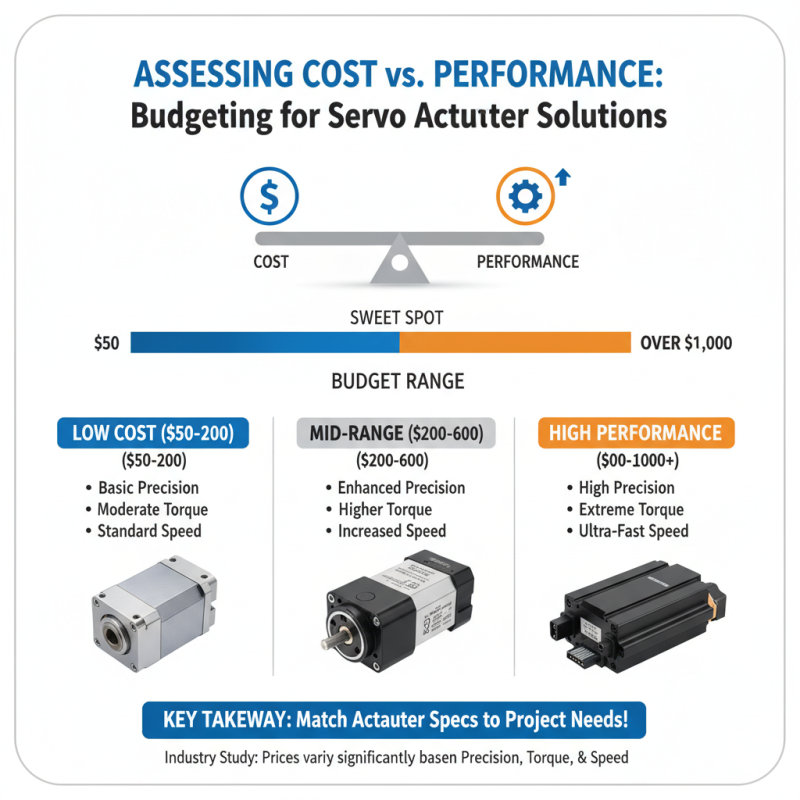
When considering servo actuators for projects, balancing cost and performance is crucial. A recent industry study reveals that servo actuators can vary significantly in price, often ranging from $50 to over $1,000. This wide range reflects differences in precision, torque, and speed. Assessing your project's requirements will help determine the right budget allocation.
It's vital to understand what you need. High-performance servo actuators provide faster response times and greater accuracy, suitable for robotics and automation. However, over-specifying can lead to unnecessary costs. Many projects function adequately with mid-range options. A cost-effective choice can still yield reliable results without breaking the bank.
**Tip:** It can be beneficial to prototype with a range of actuators. Testing allows you to pinpoint the best value for your specific needs. Also, consider total cost of ownership, including maintenance and energy consumption.
In many cases, the initial expense of high-end servo actuators doesn't justify their added benefits. Reflection on your core objectives may highlight the importance of performance over premium specifications. Evaluate your goals honestly to ensure you don’t overspend on capabilities rarely utilized.
 +86 13630122007

 CONTACT YIYAN
 CONTACT YIYAN