Leave Your Message

How to Choose a Precision CNC Grinding Machine in 2026

Choosing a Precision Cnc Grinding Machine in 2026 means looking beyond wheel speed and advertised accuracy. Grinding quality depends on the complete process: machine rigidity, thermal control, dressing strategy, coolant filtration, workholding, and inspection. Small errors matter. A warm spindle or clogged filter can leave visible variation across a batch of bearing races or tool components.

Industry reports help explain why the decision deserves care. The International Federation of Robotics’ World Robotics 2024 report recorded 4.28 million industrial robots operating worldwide in 2023, reflecting the expanding role of automation in production. Deloitte’s 2025 Smart Manufacturing Survey found that 92% of surveyed manufacturers expect smart manufacturing to drive competitiveness over the following three years. These figures do not prove that every shop needs a highly automated grinder. They do show why integration, reliable data, and repeatable setups belong in the buying discussion.

Start with the parts you actually make. Compare required tolerances, material hardness, workpiece size, surface-finish targets, and expected volume against each machine’s tested capabilities. Ask suppliers for sample-grinding results using comparable materials and measurement methods, not only brochure specifications. Check how the machine manages heat, wheel dressing, vibration, and coolant cleanliness during sustained operation. Then assess controls, operator training, maintenance access, spare-parts availability, and local service response. But specifications can mislead. I would also consider a less obvious question: can your team maintain the process consistently after installation? The right choice balances measurable performance with support your shop can use every day.
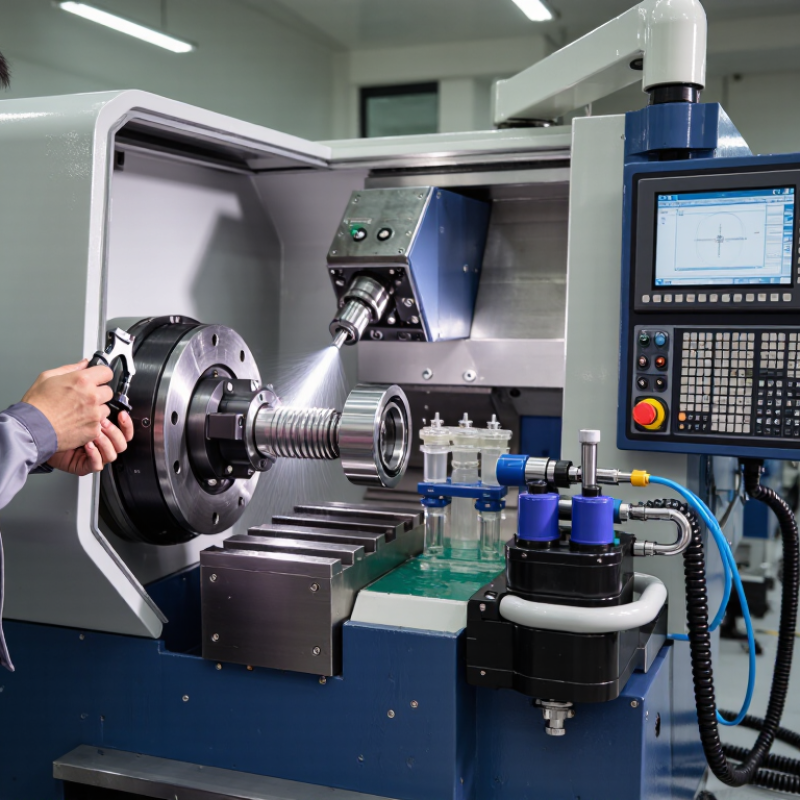
How to Choose a Precision CNC Grinding Machine in 2026

Define the Precision CNC Grinding Tasks and Required Outcomes

Before comparing machines, define the grinding work in measurable terms. List the part material, geometry, batch size, and surfaces that need grinding. Specify tolerances, surface-finish targets, and whether parts require internal, external, or profile grinding. A shaft with a 20-micron diameter tolerance demands different capabilities from a flat plate with a fine finish requirement. Include the longest part and smallest feature you expect to process. Small details matter.

Describe the results you need at the machine, not only on the drawing. For example, note how many parts must meet tolerance per shift, how often dimensions will be checked, and what inspection equipment is available. Ask suppliers to demonstrate a representative part using your material and process conditions. Record wheel type, dressing method, coolant setup, cycle time, and measured results. Real parts vary. A perfect sample may not reflect a full production run, so leave room to test repeatability. If requirements are still uncertain, flag them; guessing too early can lead to an expensive mismatch.
Match Machine Types to Part Geometry and Material

How to Choose a Precision CNC Grinding Machine in 2026
Match Machine Types to Part Geometry and Material

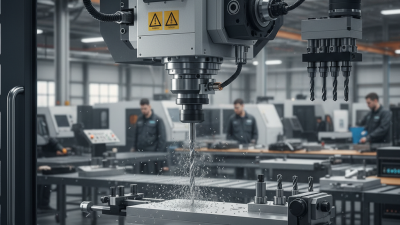
Choose the grinding process around the surface that must be controlled. Cylindrical machines suit shafts and bearing journals; internal grinders reach bores; surface grinders handle flat faces. For complex profiles, a tool grinder or multi-axis platform may reduce repositioning. That matters when a part has tight concentricity requirements: each extra setup can introduce alignment error. ISO 230-1 provides methods for evaluating machine-tool geometric accuracy, while the ISO 21920 series defines profile surface-texture parameters. Use these references to make acceptance criteria measurable, not just “high precision.”

Material changes the choice. Hardened steel often needs a wheel and coolant strategy that limit burn; carbide may call for diamond abrasives and careful control of heat and wheel wear. Aluminum can load a wheel quickly. Match wheel specification, spindle power, and coolant delivery to the material and contact area—not simply to the machine’s headline speed. A practical test cut on a representative part is still hard to beat. I’d be wary of choosing from a catalogue alone; real fixtures and stock variation can change the result.

Tips: Bring a sample drawing, material grade, tolerance stack, and target finish to the supplier. Ask for a trial cut and measured results. Include setup time and dressing frequency in the comparison. The fastest cycle is not always the lowest-cost process.

Set Accuracy, Capacity, Automation, and Software Requirements

How to Choose a Precision CNC Grinding Machine in 2026

Set accuracy from the finished part, not the machine brochure. Specify tolerance, roundness, surface finish, and how each will be measured. ISO 230-2 describes tests for positioning accuracy and repeatability of numerically controlled axes, but axis results alone do not guarantee a precise ground part. Ask for test conditions and sample-part results. Setup variation is easy to underestimate.

Capacity should match real work, including the largest diameter, length, workpiece mass, and wheel dimensions. Check spindle power and speed against the materials and removal rates you actually expect. Leave room for thermal growth and dressing cycles. Small details matter. A machine sized only for today’s part mix may soon constrain production.

Automation and software need equally specific targets. The International Federation of Robotics reported 4,281,585 industrial robots in operation worldwide in 2023, up 10% year over year, in World Robotics 2024. That signals growing automation, not a need to automate every grinding cell. Define where loading, probing, dressing, and inspection save labor or reduce variation. Verify that software stores offsets, alarms, and inspection records in a usable format. A demo can look effortless; test the actual workflow with your part data before deciding.

How to Choose a Precision CNC Grinding Machine in 2026 — Set Accuracy, Capacity, Automation, and Software Requirements

Selection Dimension Requirement to Define Suggested Starting Point How to Verify Before Purchase
Grinding process Identify the primary operation and workpiece geometry. Specify cylindrical, internal, surface, profile, tool, or multi-process grinding. Confirm whether one setup must handle multiple operations. Run a sample part using the intended wheel, workholding, coolant, and process sequence.
Dimensional accuracy Set tolerances for size, roundness, cylindricity, straightness, and profile separately. For precision production, define part-specific tolerances—often in the low-micrometre range where the application requires it—rather than relying on a single machine-accuracy claim. Request a documented acceptance test on representative geometry. Confirm measurement method, temperature, workholding, and whether results are machine or finished-part measurements.
Positioning and repeatability Define axis accuracy and repeatability over the required travel. Use a target in micrometres appropriate to the part tolerance. Require measurement across the usable axis travel, not only at one position. Review axis test results taken using a recognized machine-tool test method, such as ISO 230-2, and clarify the stated conditions.
Surface finish Specify the required surface texture and how it will be measured. Set a target Ra or another agreed parameter based on function and drawing requirements. Fine grinding can achieve low Ra values, but results depend on the process and material. Measure sample parts with an agreed instrument, cutoff, evaluation length, and measurement direction.
Workpiece capacity Define maximum workpiece length, diameter, weight, and required clearance. Size the machine for the largest part plus allowance for fixtures, centers, chucks, guarding, and wheel approach. Avoid selecting capacity from nominal dimensions alone. Confirm the full setup envelope with a layout drawing and a physical or digital clearance review.
Wheel and spindle Match wheel dimensions, spindle speed, power, and spindle arrangement to the process. Check the required wheel diameter and width, usable speed range, power at the operating speed, and compatibility with the intended abrasive and dressing method. Verify spindle specifications, wheel limits, balancing requirements, and runout measurement location in writing.
Thermal stability Assess temperature control for the machine, spindle, coolant, and production area. For tight tolerances or long production runs, consider thermal compensation, controlled coolant temperature, and a defined warm-up routine. Run a repeatability test after warm-up and during a representative production cycle; record ambient and coolant temperatures.
Automation Choose the required level of loading, unloading, part identification, and in-process measurement. Options may include manual loading, a robot or gantry loader, automatic gauging, and automatic correction. Match automation to part mix and planned unattended hours. Demonstrate the complete cycle, including changeover, part detection, recovery from a fault, and safe access for operators.
Software and programming Define programming workflow, operator access, data handling, and integration needs. Specify conversational or coded programming, simulation, tool and wheel libraries, program backup, user permissions, and any required network or factory-system connections. Test a representative program edit, backup and restore, data export, and any required machine-to-system communication.
Dressing and process control Specify wheel dressing, compensation, and process-monitoring requirements. Determine whether the process needs automatic dressing, profile dressing, in-process gauging, probing, or monitoring for wheel wear and process variation. Run a production-style trial and review how dressing intervals and measured corrections affect part consistency.
Coolant and filtration Size the coolant system for flow, filtration, temperature control, and fluid maintenance. Choose filtration and coolant management based on material, wheel type, finish requirement, and expected grinding debris. Confirm the filtration specification, tank capacity, maintenance access, mist control, and coolant-condition monitoring plan.
Utilities and installation Check floor, electrical, air, extraction, and environmental requirements. Review machine footprint, mass, foundation needs, electrical supply, compressed air, exhaust, and access for delivery and maintenance. Obtain an installation drawing and utility schedule; verify site conditions before delivery.
Service and lifecycle Plan for training, maintenance, spare parts, and machine availability. Compare expected maintenance tasks, service response arrangements, training scope, and availability of critical replacement parts. Request a written service plan and clarify warranty coverage, maintenance intervals, and support responsibilities.

Planning note: These are selection guidelines, not guaranteed machine specifications. Confirm final performance with a representative part trial and written acceptance criteria under agreed operating conditions.

Compare Machine Specifications, Suppliers, and Total Ownership Costs

Choosing a precision CNC grinding machine in 2026 means looking beyond advertised accuracy. Compare spindle speed, wheel dimensions, axis travel, workholding, and control features against the parts you actually make. Ask suppliers to grind a sample using your material and target tolerance. Check the finished part after the machine reaches operating temperature, not only at startup. Small differences matter.

Tips: Request a written acceptance test with measurable criteria. Ask how the supplier verifies repeatability and what training, installation, and service support are included. A polished demonstration is useful, but it cannot answer every production question.

Then compare total ownership costs over a realistic operating period. Include tooling, coolant and filtration, maintenance, energy use, operator training, and expected downtime. Get service response times and spare-part availability in writing. A lower purchase price can lose its appeal if repairs take weeks. Estimates are rarely exact; revisit your assumptions with production staff before deciding. The best fit may be the machine that holds tolerance reliably on your most common jobs, not the one with the longest feature list.

Verify Performance Through Testing, Training, and Service Support

How to Choose a Precision CNC Grinding Machine in 2026

A precision CNC grinding machine should prove its performance on parts like the ones you actually make. Ask for a trial using your material, wheel specification, and target tolerances. Measure several finished parts, not just one. Check repeatability, surface finish, spindle vibration, and thermal drift after the machine has warmed up. Run it warm. A clean demonstration is useful, but it cannot show every shift-to-shift variation.

Tips: Bring a drawing with critical dimensions and surface-finish requirements. Record the measurement method, coolant condition, and cycle time. Ask to inspect the part before and after repeated runs. Small differences matter.

Training and service support deserve the same scrutiny as the machine. Operators should practice setup, wheel dressing, probing, and recovery from common alarms. A short software tour is not enough. Ask who handles technical questions, what remote support includes, and which replacement components are typically stocked. Confirm expected response times in writing. If possible, speak with a user who runs similar work. Service promises can sound reassuring; the practical details are what count. And sometimes a test exposes a weak point nobody expected. That is useful, even if it complicates the purchase.

How to Choose a Precision CNC Grinding Machine in 2026

Verify performance through acceptance testing, operator training, and documented service support.

How to read this example: Each bar shows a measured error as a percentage of the buyer-set maximum allowed for that test; lower is better, and 100% is the limit. These illustrative results are not an industry benchmark. Set limits for your parts and process, then confirm them with agreed acceptance tests. Also verify training coverage and service response terms before purchase.