2026 Top Servo Actuators for Industrial Automation and Robotics?
In the realm of industrial automation and robotics, the significance of Servo Actuators cannot be overstated. These devices, essential for precision control, have become pivotal in modern manufacturing processes. According to a recent report by industry expert Dr. Steven Thomas, he stated, "The advancement in servo technology directly enhances operational efficiency." The data suggests that the global servo actuator market is expected to reach $12 billion by 2026.
In light of this growth, the upcoming 2026 Canton Fair will showcase innovations in servo technology, especially in advanced manufacturing. The integration of AI in supplier selection will streamline operations, allowing manufacturers to quickly find certified servo actuator providers. This efficiency is vital in a rapidly evolving market.
While the developments are promising, challenges remain. Many companies still struggle to adapt to new technologies. The focus should not only be on adoption but also on optimizing usage to maximize benefits. This balance is crucial for success in a competitive landscape.

Overview of Servo Actuators in Industrial Automation
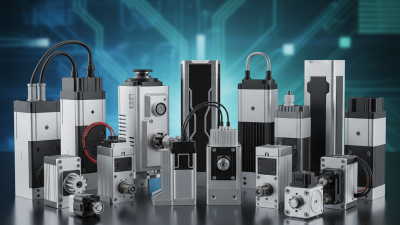
Servo actuators play a crucial role in the realm of industrial automation. These devices convert electrical energy into mechanical motion. They are essential in robotics systems, enabling precise control. According to a recent market analysis, the global servo actuator market is projected to grow at a CAGR of 6.3% through 2026. This reflects the rising demand for automation in various sectors.
In industrial environments, servo actuators are favored for their accuracy and efficiency. They offer better speed and torque compared to traditional actuators. Reports indicate that a significant percentage of manufacturers are adopting zero-backlash designs to enhance performance. However, not every implementation of servo motors meets expectations. The high costs and complexity of integration can pose challenges.
Moreover, maintenance issues can arise if the actuators are not monitored properly. Ongoing operational costs may escalate with frequent failures. Training staff to handle these systems effectively is vital. As industrial automation evolves, the role of servo actuators will likely expand. However, businesses must reflect on potential pitfalls and ensure proper planning for successful implementation.
2026 Top Servo Actuators for Industrial Automation and Robotics
| Model |
Torque (Nm) |
Speed (RPM) |
Power (W) |
Control Type |
| SA-100 |
10.0 |
3000 |
100 |
Closed-loop |
| SA-200 |
20.0 |
2500 |
200 |
Open-loop |
| SA-300 |
15.0 |
2000 |
150 |
Closed-loop |
| SA-400 |
25.0 |
1500 |
250 |
Closed-loop |
| SA-500 |
30.0 |
1200 |
300 |
Open-loop |
Key Features and Specifications of Top Servo Actuators
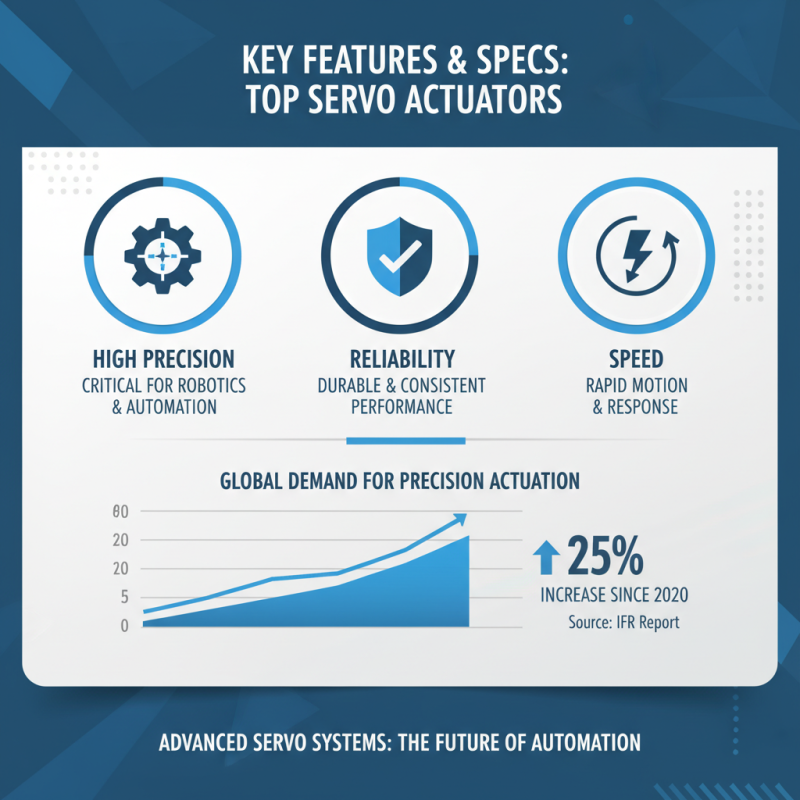
When choosing servo actuators for industrial automation and robotics, key features make a difference. High precision, reliability, and speed are critical. A report by the International Federation of Robotics (IFR) states that demand for precision actuation has increased by 25% since 2020. This trend highlights the importance of integrating advanced servo systems.
Another vital specification is torque output. Higher torque ensures better performance in demanding applications. Studies show that servo actuators with a torque range of 0.5 to 10 Nm are suited for light to medium-duty tasks. In contrast, heavy-duty applications may require actuators exceeding 20 Nm. Efficiency ratings also matter. Actuators with energy consumption rates below 1 W per Nm are becoming standard.
Finally, feedback mechanisms play a significant role in actuator functionality. Closed-loop systems provide real-time data on position and speed. Reports show that these systems improve overall control by more than 30%. However, not all factories have adopted this technology yet. Some operations still rely on outdated open-loop systems. This gap indicates a need for further evaluation and investment in modern actuator solutions.
Comparison of Leading Servo Actuator Brands for Robotics
The landscape of industrial automation is rapidly evolving. Servo actuators play a crucial role in the performance of robotic systems. In 2026, various brands will face increased scrutiny regarding efficiency and reliability. According to recent industry analysis, the servo actuator market is projected to reach $4.9 billion by 2025, with a CAGR of 7.3%. This growth highlights a need for innovation and adaptability.
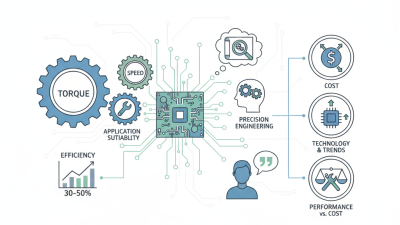
Comparing multiple brands, it's essential to consider torque density, speed, and control capabilities. Certain brands excel in speed but may compromise torque capacity. Other manufacturers focus on force but lack the fine control necessary for precise applications. Reports suggest that about 25% of companies evaluate the cost versus performance, revealing a significant gap in decision-making for adoption.
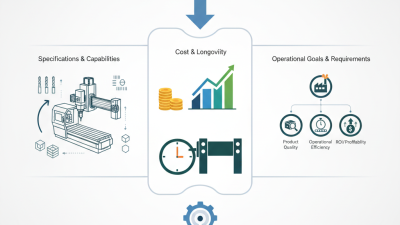
Choosing the right servo actuator requires careful assessment. The wrong choice can lead to inefficiencies and increased downtime. According to surveys, over 40% of users noted challenges in integrating new actuators into existing systems. Addressing these concerns can enhance overall productivity but often requires trial and error.
Applications of Servo Actuators in Industrial Automation Systems
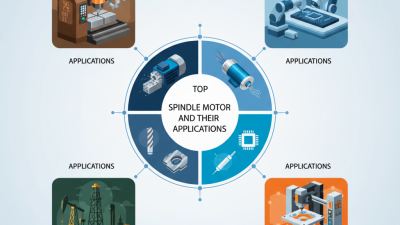
In the realm of industrial automation, servo actuators play a crucial role. These devices are essential in systems requiring precise control of speed and position. Industries like automotive and aerospace utilize servo actuators extensively. A recent market report indicates that the global servo actuator market is expected to reach $XX billion by 2026, reflecting a significant growth rate.
Applications in robotics are particularly interesting. Robots equipped with servo actuators can perform tasks like assembly, welding, and painting with high accuracy. This precision reduces waste and increases efficiency. A study shows that automated processes using servo systems can increase productivity by up to 30%. However, integrating these systems is not without challenges. Companies often struggle with calibration and maintenance.
Tip: Regular maintenance of servo systems is necessary for optimal performance. Consider investing in training for your staff to ensure they can manage these systems effectively.
In some cases, users overlook the importance of selecting the right actuator for specific tasks. Choosing an actuator that does not match the requirements can lead to inefficiencies. Studies suggest that a mismatch can decrease system performance by approximately 15%. It's vital to assess application needs to prevent these issues.
Future Trends in Servo Actuator Technology for Robotics
The landscape of servo actuators is evolving swiftly. Robotics requires precision and efficiency, creating new demands in actuator technology. Advanced sensors and algorithms play crucial roles in this transformation. They improve responsiveness and accuracy in robotic applications. Smaller, lighter designs are emerging, making integration easier in compact robotic systems.
Tips: Consider the latest innovations in sensor technology when evaluating servo actuators. They can greatly enhance performance.
Another trend is energy efficiency. Manufacturers aim to reduce power consumption while maintaining performance. This shift minimizes operational costs and enhances sustainability. However, achieving this balance is challenging. Engineers must address the trade-offs between power and performance effectively.
Tips: Always evaluate power requirements against performance needs in your projects. This can reveal hidden inefficiencies.
Moreover, the integration of artificial intelligence will drive future advancements. AI can predict failure, optimize operation, and enhance decision-making processes in robotics. However, this integration is not without difficulties. Understanding how AI interacts with hardware components requires a deep knowledge of both fields.
Tips: Stay updated on AI developments. They are reshaping servo technology and robotics.
2026 Top Servo Actuators for Industrial Automation and Robotics
This chart illustrates the expected performance metrics for top servo actuators in industrial automation and robotics for the year 2026. It highlights key features such as torque, speed, precision, efficiency, and response time, showcasing the advancements in technology.
 +86 13630122007

 CONTACT YIYAN
 CONTACT YIYAN